More than 61 million Americans are now age 65 or older, accounting for 18% of the U.S. population. As this population continues to grow, so does the demand for solutions that help older adults maintain their independence and age safely at home.
Nonetheless, everyday tasks become more complicated as your loved one ages. Even with a desire for independence in old age, things like cooking, cleaning, and bathing can be difficult to do alone. Challenges like these don’t necessarily mean your loved ones need to go to an assisted living facility or move in with you. Seniors can continue living independently with the right help.
Both in-home care services and home adaptations can make a difference when it comes to helping older adults maintain independence.
The Benefits of Promoting Independence in the Elderly
From the time we are children, we crave independence. We desire the freedom that comes with making our own decisions and doing what we want when we want. However, independent living becomes challenging, and even frustrating at times, as age.
Tasks that were once simple enough to complete quickly might take a little more time now. You’ve probably noticed your loved one losing some mobility or struggling with everyday chores like folding laundry or cooking their favorite foods. This can be frustrating and negatively impact their mental health.
Like most families who experience this struggle, the first thought is to look into nursing homes or assisted living. However, most people don’t want to lose their independence or comfort of their home. According to a recent Pew Research Center analysis, 26% of Americans age 65 and older live alone. For many older adults, aging in place isn’t just a preference, it’s a priority. Remaining at home allows seniors to maintain their independence, stay connected to familiar surroundings, and preserve the routines that contribute to their overall well-being.

Aging adults benefit from independent living because they are familiar with their surroundings, comfortable in their home, and can make their own decisions, all of which strengthen their physical, emotional, and mental health.
Using an in-home care service enables seniors to age in their homes. They get help with everyday tasks but still retain the freedom to live as they choose. Ultimately, when seniors stay in their own homes, they don’t have to give up all that’s meaningful about their current lives.
Benefits of Staying in Your Own Home
Benefit 1: Familiarity with Surroundings
Seniors who age at home have improved aging experiences. Recent research continues to show that aging in place can support older adults’ mental well-being by helping them maintain familiarity, independence, social connections, and a sense of control over their daily lives.
Familiar surroundings create a sense of stability and comfort, which is essential for someone who may be dealing with the early stages of memory loss or other aging-related challenges.
If your senior wakes up in an unfamiliar place, it can upset their emotional and mental stability. This is known as confusional arousal, a phenomenon in children and adults that occurs when someone suddenly awakes, but remains confused or disoriented about where they are.
And while most people will eventually recognize their surroundings, older adults who struggle to remember where they are cannot easily adapt to new surroundings. This is why leaving their home can lower their quality of life and affect their mental health overall.
Seniors staying in their own homes can always count on the familiarity of their surroundings. This can translate to less stress and anxiety and a greater sense of security and confidence.
Benefit 2: At-Home Comforts
There’s a reason the phrases “There’s no place like home” and “Home, sweet home” permeate American culture. Home is supposed to be a place of rest and solitude. We are supposed to be most comfortable at home.
These feelings don’t magically change when we get older—if anything, the desire for home to be a safe, comfortable haven increases since we spend more time there than anywhere else.
According to AARP’s 2024 Home and Community Preferences Survey, 75% of adults age 50 and older want to remain in their current homes as they age, and 73% want to stay in their communities. From familiar surroundings and cherished routines to neighbors, gardens, and local connections, older adults consistently report a strong preference for aging in place. Simply put, most seniors want to remain in the homes and communities they know and love.
Benefit 3: Sole Decision-Making
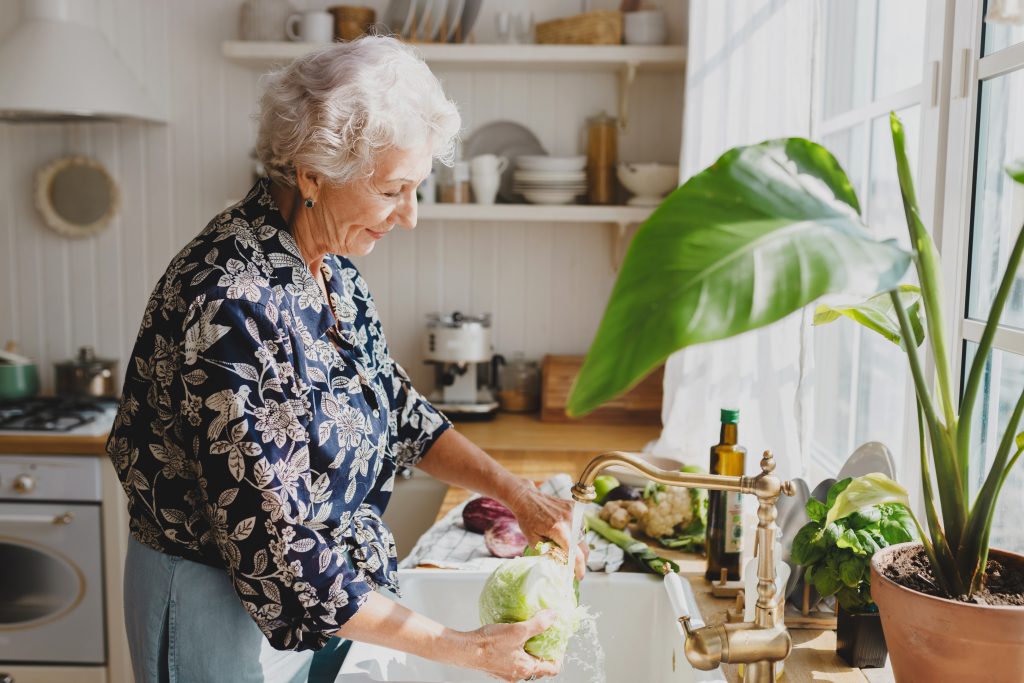
One of the hardest things about moving into a nursing home or assisted living facility is that seniors lose some of their decision-making ability. On the other hand, when your loved one lives and ages at home, they maintain independence and most of their personal autonomy.
Having the freedom to choose how they spend their time, what they eat for dinner, and other everyday things reinforces the awareness that they aren’t helpless. It also allows them to continue doing the things they love in their own space, whether that’s cooking, gardening, painting, or any other hobby.
How In-Home Services Can Help Seniors Stay Independent
Independent living doesn’t mean you aren’t getting some help from other people. Everyone needs assistance with things, whether you’re living in your first home as a young couple or coming up on 40 years in the same residence.
Maintaining independence doesn’t mean doing everything alone. In fact, many older adults are able to remain safely at home because they have the right support in place for the tasks that have become more difficult with age.
With the right support, older adults can maintain their independence, stay connected to their communities, and continue aging safely at home.
Here are some of the services you can consider to help your aging older adult through their golden years:
- Companionship – A caregiver will come and spend time with your senior. Your loved one can mentally engage in conversation and games during the visit. But most importantly, your senior will not be alone, thereby limiting the adverse effects of social isolation.
- Light Housekeeping – One of the most challenging things for aging adults to maintain is routine house chores. You and your elderly parents never have to worry about washing dishes or folding laundry with housekeeping service from a senior care provider. A caregiver can help you with those chores, thereby promoting independence.
- Meal Preparation – Cooking is a challenge for many people, especially as we age. With meal preparation services, a caregiver assists in planning meals and cooking food, so you never have to worry if your family member is eating a healthy diet.
- Medication Reminders – Many older adults have mental or physical health concerns and need to take medications to manage their health. To help with this, caregivers provide medication reminders, ensuring a senior is taking their medicine at the right time and in the correct amounts. Caregivers monitor any side effects and report them to you and the doctor. This goes a long way in promoting senior independence because there’s no worry over missed medications.
- Personal Care – One of the most challenging things for elderly loved ones is to admit they struggle with things like dressing and bathing. Addressing this difficulty requires a sensitive caregiver who understands the importance of patience and empathy.
Each of these services can act as additional support that allows seniors to continue living on their own while staying safe.
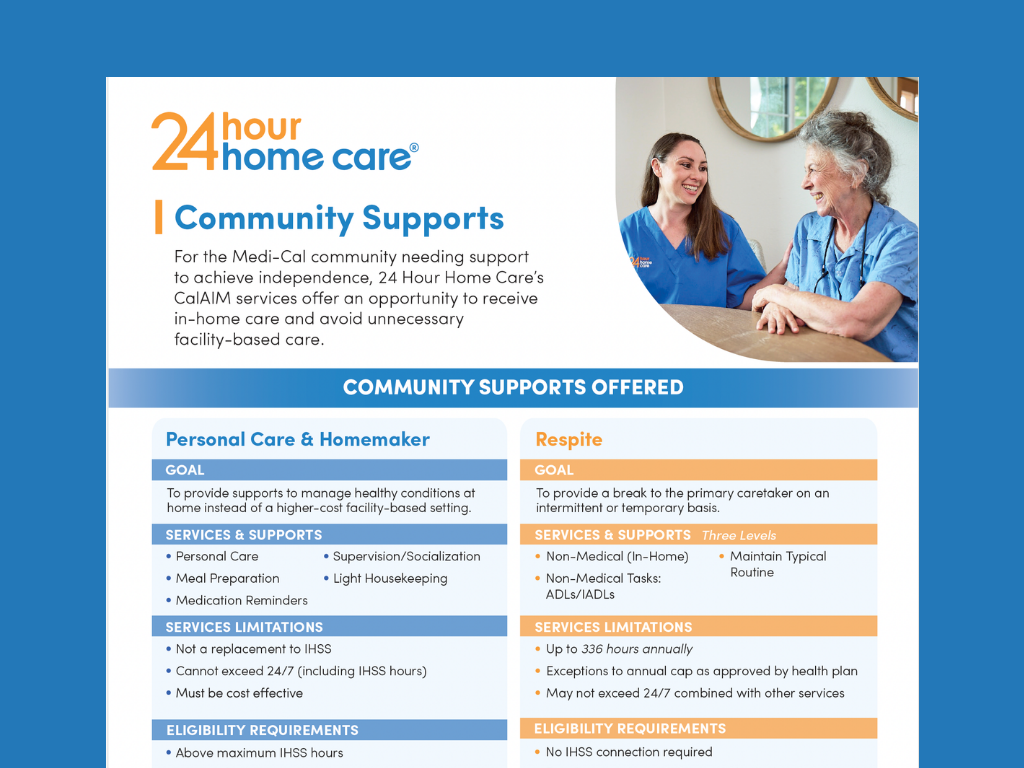
Through 24 Hour Home Care’s Community Supports program, eligible Medi-Cal members can receive non-medical in-home personal care and homemaker services designed to help them continue living independently in the place they’re most comfortable: home. These services support members with everyday activities while helping reduce the risk of falls, hospitalizations, and unnecessary moves to higher levels of care.
How to Adapt a Senior’s Life for Independent Living
When you decide to use an in-home care service, there are a few things you need to do to help your loved one have the best experience. Certain accommodations can make your senior’s life much better.
Changes in Construction
Depending on the home’s layout, you might need to make some changes to the design to make independent living possible. Some potential changes to promote independence include:
- Changing stairs to ramps for easier access and transportation. Ramps are great for older adults who have difficulty walking. It is much harder to trip on a ramp.
- Leveling floors is another excellent way to prevent trips and falls. Since some rooms have a step to enter a new space, redoing the floor or installing a short ramp makes the entire house more accessible.
- Adjust the height of countertops and ledges for easier access. For seniors who use wheelchairs, countertops are too tall, so it’s difficult to reach things further back. Lowering shelves makes it easy for these older family members to get everything they need.
- Change the home’s layout to focus on providing quick and easy access to the most frequented rooms during the day. This change might mean moving the master bedroom to the first floor, to the front of the house, or near the kitchen.
- Widen the doorways so walkers and wheelchairs can easily navigate through the home.
- Change the tub to a roll-in shower. Whether or not your loved one uses a wheelchair, having a roll-in shower makes bathing much easier for everyone and improves safety.
Accessories for Independent Living
Construction changes are essential for helping your loved one continue living independently. However, once things are changed, you might want to include accessories for safety purposes. When outfitting your senior’s home, consider installing and using the following items:
- Home alarm system and a doorbell camera for security and protection
- Smart home features so your loved one can adjust lighting, temperature, and security from their smartphone
- A wearable medical alert system, such as a medical alert bracelet or necklace
- Handrails near stairs and ramps to provide three contact points for safe walking and navigation
- Assistive seating for staircases in the home
- Corner protectors to keep your loved ones from bruising and cutting their skin on sharp corners
- Extra lighting, such as battery-powered lights for fixtures in the middle of rooms and brighter bulbs in existing lamps
- Non-slip rug grippers and pads to reduce the chance of slips and falls
How 24 Hour Home Care’s Community Supports Program Helps Seniors Stay Independent
Through 24 Hour Home Care’s Community Supports program, eligible Medi-Cal members can receive non-medical in-home personal care and homemaker services designed to help them continue living independently in the place they’re most comfortable: home. These services provide practical assistance with activities of daily livings (ADLs) while helping reduce the risk of falls, hospitalizations, and unnecessary moves to higher levels of care.
What makes 24 Hour Home Care different is our Agency With Choice model. Rather than having a caregiver assigned to them, eligible members can choose someone they already know and trust—such as a family member, friend, neighbor, or other trusted person in their community—to provide care. We handle the hiring, onboarding, training, and payroll, making it easier for families to access support while preserving the relationships that matter most.
With the right support, older adults can maintain their independence, stay connected to their communities, and continue aging safely at home.